
He is the country's tenth NSA, but it is for the first time that a serving ISI chief has been given the task to serve concurrently in the two key positions.

Moeed Yusuf, South Asia advisor at the United States Institute of Peace and one of the rising stars among South Asia policy wonks in the country, who has done extensive field research on the youth of Pakistan, has said they are virulently anti-extremist. He said that 67.1 percent of the Pakistani population is below the age of 30 and "So, wherever this particular demographic decides to take Pakistan, is going to be the destiny of this country."
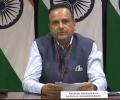
On questions about remarks by Pakistan PM's advisor on national security Moeed Yusuf that India has sent a message to Pakistan with a desire for conversation, MEA spokesperson Anurag Srivastava said, "Let me make it clear that no such message was sent from our side."

At a media briefing, ministry of external affairs spokesperson Arindam Bagchi asked Pakistan to focus on setting its own house in order in containing terror networks and said that the international community is well aware of that country's credentials when it comes to terrorism.
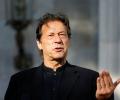
"We've been told every time that... (the phone call) will happen, it's technical reasons or whatever. But frankly, people don't believe it," he said. "If a phone call is a concession, if a security relationship is a concession, Pakistan has options," he added, refusing to elaborate.

In 2020 India was compelled by China to change its national security strategy. From counter-insurgency, which the army has been focussed on for years, we shifted to conventional war, observes Aakar Patel.
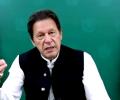
Pakistan Prime Minister Imran Khan on Friday launched the country's first-ever national security policy, which articulates a citizen-centric framework, placing economic security at its core unlike the previous one-dimensional security policy where the focus was on the military.

Pakistan on Saturday said it was not satisfied with India's 'simplistic explanation' on the 'accidental firing' of a missile that landed in Pakistan's Punjab province and demanded a joint probe to accurately establish the facts surrounding the incident.
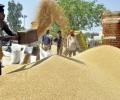
Pakistan Prime Minister Imran Khan announced on Monday that his government will allow India to send a humanitarian shipment of 50,000 metric tonnes of wheat to neighbouring Afghanistan through its territory after finalisation of the transit modalities.

'The world's patience on terrorist safe havens is running thin and that is not good for Pakistan'

'This cannot be credibly explained away by referring to a "technical glitch".'
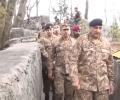
General Bajwa, unlike many of his predecessors, believes the Pakistan army's long-term interests lie in reducing tensions with India, reports Ajai Shukla.

The terrible beauty of Doval's initiative is that it is all about a new journey rather than about a set compass pointing toward a pre-determined destination, observes Ambassador M K Bhadrakumar.
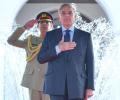
Pakistan's new Prime Minister Shehbaz Sharif and Russian President Vladimir Putin have quietly exchanged letters to strengthen bilateral relations, a media report said on Sunday, amidst allegations by Imran Khan that his maiden visit to Moscow, much against Washington's wishes, led to his ouster.

The leaders of the two countries "discussed the main aspects of bilateral cooperation and exchanged views on current regional topics, including developments in South Asia," said a brief statement issued by the Russian President's office - Kremlin.

The experts said the terror strike shows the United States has failed to persuade Pakistan to act against Jaish-e-Mohammad and other terrorist groups.
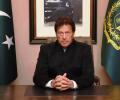
India cannot afford to be complacent about a possible Pakistan resort to military options across the LoC, warns Rana Banerji, who headed the Pakistan desk at the Research and Analysis Wing, India's external intelligence agency.

A confrontation with the Taliban in Kabul in this fading light of a twilight zone would have been sheer madness, observes Ambassador M K Bhadrakumar.

The Taliban's main challenge comes on the financial and economic front and there Pakistan doesn't have the capacity to be of any meaningful help, observes Ambassador M K Bhadrakumar.
'No prime minister of India is averse to normalise relations with Pakistan, if it is possible to do so without altering our fundamental position on Jammu and Kashmir,' notes Ambassador T P Sreenivasan.
'I think it is extremely naive for anyone to think that terrorism can be completely eliminated anywhere in the world. However, as far as cross-border terrorism specific to Ind-Pak goes, Musharraf has made a difference.'

It would be realistic to see India's position on the DGMOs joint statement more as 'engagement, different from dialogue', where our subsequent options could be decided depending on the realities of the situation on the ground, notes Rana Banerji, who headed the Pakistan desk at the Research and Analysis Wing, India's external intelligence agency.

An agreement between India and Pakistan, however tenuous, has its own meaning and impact. We have not heard the last word about the ceasefire agreement, observes Ambassador T P Sreenivasan.
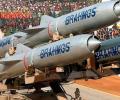
'Pakistan was very mature in the way it dealt with the incident.' 'India too owned up to the accident.' 'The whole incident was resolved quite amicably.' 'Both countries should be proud of how they have handled this situation.'

Government sources said the Pakistani action was "blatant violation" of the SCO charter and against all its established norms of safeguarding the sovereignty and territorial integrity of SCO member states.

Thimpu apparently didn't think it necessary to take Delhi into confidence. Bhutan is loathe to getting dragged into the geopolitical rivalry between India and China. And for Beijing, this was too good an opportunity to be missed to thumb its nose at the powers-that-be in Delhi, points out Ambassador M K Bhadrakumar.
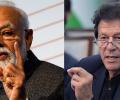
Modi's hardline policy towards Pakistan and J&K has created numerous leverages and bargaining positions that New Delhi can bring to the bargaining table and translate into concessions, argues Ajai Shukla.
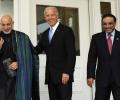
US-Pakistan relations are poised to touch a qualitatively new level under the Biden administration, notes Ambassador M K Bhadrakumar.
